Homeowner guide

Kitchen & bathroom remodeling permits in Southwest Florida

Request Your Estimate
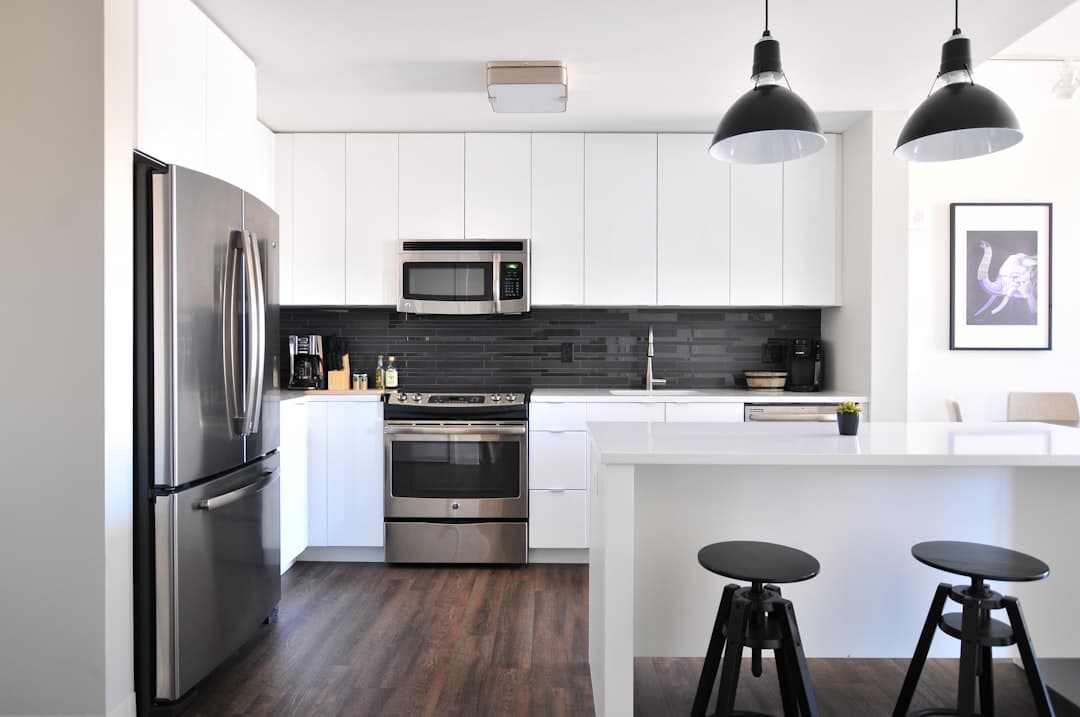
White kitchen with flat-panel cabinets, a dark tile backsplash, a stainless refrigerator and range, a white island with two black stools and two black pendant lamps

The short answer

Usually yes, once the work goes beyond finishes.

Required for
Alterations and any plumbing, electrical, mechanical, or gas work
Issued by
The city or county building department for your address
State code
Florida Building Code, 8th Edition (2023)
Checked

In Florida, a permit is required to alter a building, and to install, alter, or replace any part of its plumbing, electrical, mechanical, or gas systems. That covers most kitchen and bathroom remodels: moving a sink, adding circuits, relocating a drain, or taking out a wall.

Finish work is where the answer changes from one community to the next. Florida’s building code does not contain the general exemption for painting, tile, cabinets, and countertops that many people expect. Each city and county decides what it exempts, and their lists are not the same.

The permit comes from the building department that covers your address: the city if you are inside city limits, the county if you are not. This guide sets out which office that is for each community we serve, and what each one publishes about remodeling.

The state rule

What Florida’s building code requires

Section 105.1 of the Florida Building Code requires a permit before anyone constructs, enlarges, alters, repairs, or demolishes a building, or installs, alters, repairs, removes, or replaces an electrical, gas, mechanical, or plumbing system the code regulates. Florida Statutes section 553.79 makes it unlawful to alter or repair a building without first obtaining one.

The state’s list of exempt work in section 105.2 is short. It covers a few gas and mechanical items and two kinds of plumbing repair: stopping leaks, and clearing stoppages or removing and reinstalling a toilet, provided no valves, pipes, or fixtures are replaced or rearranged. It has no list of exempt building work at all.

The same section says an exemption from a permit does not authorize work that violates the code.

State law lets local governments amend the code’s administrative provisions, which is why the rules for finish work differ from one office to the next. The 8th Edition took effect on December 31, 2023, and a 9th Edition is scheduled to take effect on December 31, 2026.

New in 2026

The exemption for small jobs

Since July 1, 2026, Florida law requires local governments to exempt the owner of a single-family dwelling, or the owner’s contractor, from a building permit for work valued at less than $7,500.

The exemption has limits. It does not apply to a property that is partly or wholly in a flood hazard area, or to any electrical, plumbing, structural, mechanical, or gas work. It is not automatic: the owner or contractor must send the building department a written request with the contract or other documentation, and a project may not be divided to stay under the limit.

Because it excludes plumbing and electrical work, the exemption does not cover a remodel that touches either. The City of Cape Coral notes that more than 60 percent of the city is in a mapped flood hazard area, so the exemption will not apply to most projects there, and that work may not begin until the city has approved the request. Collier County applies it only to single-family detached structures.

Finish work

Cabinets, countertops, tile, and showers

What the local building departments publish, as of the date this guide was checked. If your project is not described, ask the office for your address.

Cabinets

The City of Naples requires a permit to replace kitchen cabinetry or a bathroom vanity, in single-family homes and condominiums. Charlotte County does not require one for cabinet work outside a flood zone that does not reconfigure the space. Collier County exempts cabinetry in detached single-family homes.

Countertops

The City of Naples exempts countertops and sinks that go back in the same location. Collier County exempts countertops in detached single-family homes. Several other offices do not mention countertops in their published lists.

Tile and flooring

The City of Naples and the City of Punta Gorda list floor and wall tile as exempt, and Collier County exempts flooring installation. Charlotte County exempts floor coverings outside a flood zone.

Showers

Replacing tile in a shower is treated differently from replacing the pan beneath it. The City of Punta Gorda and Charlotte County require a permit when the shower pan is replaced, and the City of Cape Coral leaves shower pans and wet-area waterproofing out of its small-job exemption.

Fixtures

Replacing a faucet, sink, or light fixture with a similar one is exempt in several places, within a $500 limit in Lee County and Bonita Springs. Relocating or adding plumbing or circuits requires a permit.

Homes in a flood zone

Flood zones narrow the exemptions. The City of Cape Coral requires a permit for all improvements in a Special Flood Hazard Area, the Village of Estero for all floodplain development, and Charlotte County’s exemptions apply only outside a flood zone.

FEMA 50% rule

Your address

City or county?

A mailing address does not tell you which office issues your permit. Whiskey Creek and Iona have Fort Myers addresses and are part of unincorporated Lee County. Lehigh Acres is unincorporated, so its permits come from Lee County. The City of Punta Gorda is the only incorporated city in Charlotte County, so Port Charlotte’s permits come from the county.

The Village of Estero has issued its own building permits since 2016. Records for earlier projects there are held by Lee County.

The City of Fort Myers publishes an “Am I in the City?” map that shows whether a parcel is inside city limits, and Lee County’s LeeSpInS property tool names the municipality for parcels inside one. If you are still unsure, either office can tell you.

The paperwork

Who applies, and what else is filed

Contractor or owner

Florida requires a license to work as a contractor. State law has an owner-builder exemption for owners improving a one-family or two-family residence for their own use, and the owner must personally appear and sign the permit application.

Notice of commencement

When the direct contract is greater than $5,000, Florida law requires a copy of the recorded notice of commencement to be filed with the building department before the first inspection.

Condominiums and associations

A building permit does not replace your association’s approval. Every Florida permit carries a notice that additional restrictions may apply to the property.

Condo remodeling

Planning a remodel with us

Ask us about permits for your project during your free estimate. Which office issues them, and what it requires, depends on your address and the scope of the work.

By community

Who issues permits in each community

Find your community, then confirm whether your address is inside the city or village limits. The notes summarize what each office publishes about remodeling, and the linked pages have the detail.

Good to know

Permit questions

01

Do I need a permit to remodel a bathroom in Florida?

If the remodel alters the plumbing, the electrical, or the walls, yes. Florida’s building code requires a permit to alter a building or to install, alter, or replace plumbing, electrical, mechanical, or gas systems. Its plumbing exemptions cover only stopping leaks, clearing stoppages, and removing and reinstalling a toilet.

02

Do I need a permit to replace kitchen cabinets or countertops?

It depends on the building department. The City of Naples requires a permit to replace kitchen cabinetry but not countertops that go back in the same location. Charlotte County does not require one for cabinet work outside a flood zone that keeps the same layout, and Collier County exempts cabinetry and countertops in detached single-family homes. Moving plumbing or adding circuits for the new kitchen requires a permit.

03

Do I need a permit to convert a tub to a shower?

Generally, yes. The conversion alters the plumbing, which Florida’s code does not exempt. The City of Punta Gorda and Charlotte County both list shower pan replacement as work that requires a permit.

04

Does Florida’s $7,500 permit exemption cover a kitchen or bathroom remodel?

Only if the work is on a single-family dwelling outside a flood hazard area and involves no electrical, plumbing, structural, mechanical, or gas work. A written request to the building department is required. Most kitchen and bathroom remodels involve plumbing or electrical work, which the exemption excludes.

05

How do I find out whether my home is in the city or the county?

A mailing address is not a reliable guide. The City of Fort Myers publishes an “Am I in the City?” map, and Lee County’s LeeSpInS property tool names the municipality for parcels inside one. The building department for either the city or the county can also tell you.

06

Is my condominium association’s approval the same as a building permit?

No. Association approval is a private requirement of your community, and a building permit comes from the city or county. A project can need both.

Planning a remodel?

Complete the form below or call us at (239) 295-8613 and one of our team members will be in touch to discuss your project and provide a free, no-obligation estimate.

Open form in a new tab Or call (239) 295-8613

Collaborative Construction

Let’s start your next
home remodeling project.